Understanding the Physics Behind a Sharp Chef’s Knife Edge
As any chef will tell you, the most important tool in the kitchen is a sharp chef’s knife. It’s the workhorse that allows them to chop, slice, and dice their way through even the toughest ingredients with ease. But have you ever stopped to consider the science behind this seemingly simple tool? Why is it that a sharp chef’s knife is so much more effective than a dull one? In this article, we’ll delve into the physics behind a sharp chef’s knife edge and explore why it’s essential for any aspiring chef to understand.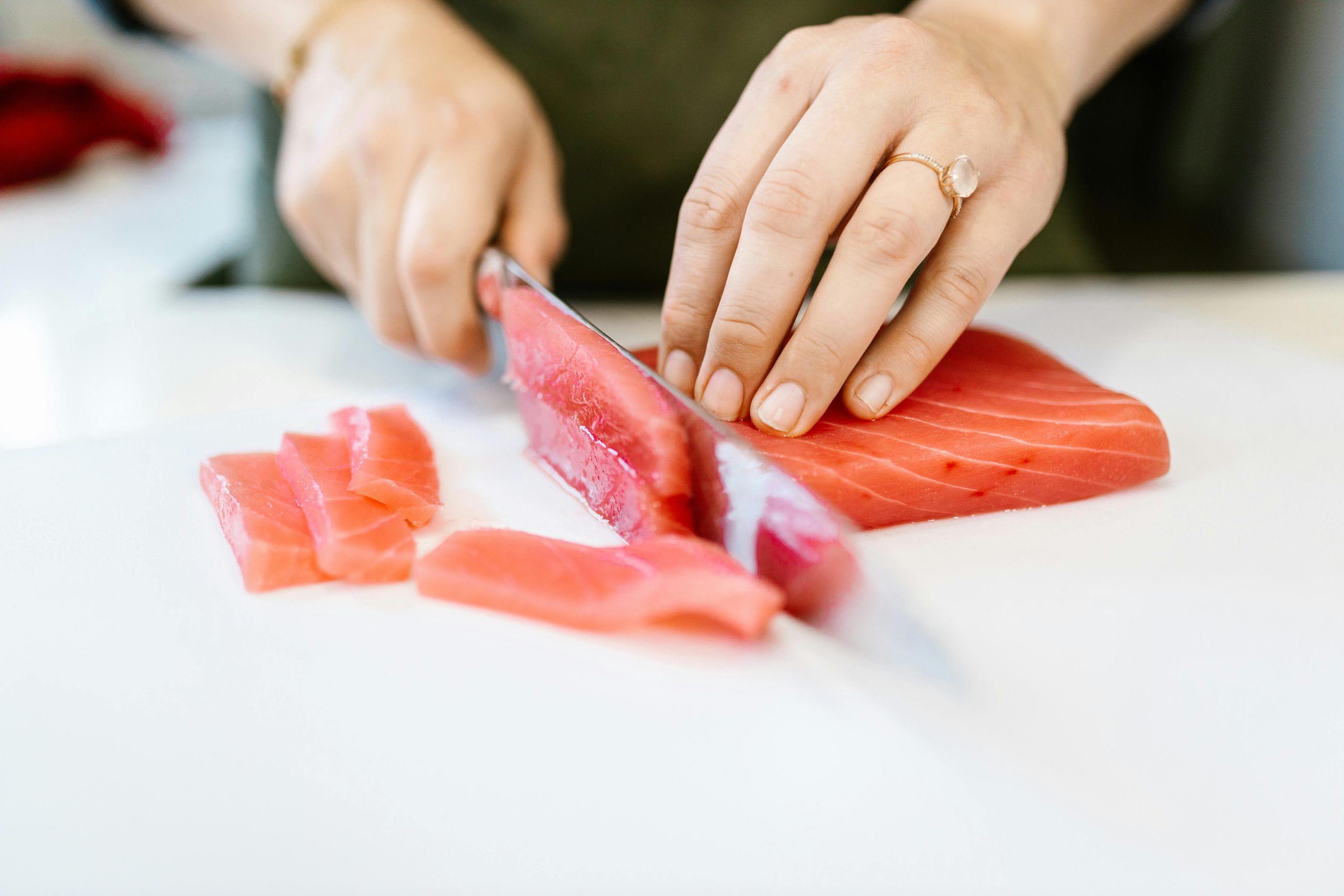
The Basics of Knife Edges
Before we dive into the specifics of what makes a sharp chef’s knife so effective, let’s first discuss the basics of knife edges. There are two main types of knife edges: straight and serrated. Straight edges, as the name suggests, have a flat edge that is equally sharp along the entire length of the blade. Serrated edges, on the other hand, have small, jagged teeth that are typically only sharpened on one side.
While both types of edges serve their own purposes, a sharp chef’s knife typically has a straight edge. This is because a straight edge allows for more control and precision when cutting, making it the preferred choice for tasks such as mincing and dicing. However, the physics behind achieving and maintaining a sharp edge are the same for both types of knives.
The Role of Angle in a Sharp Edge
One of the key factors in creating a sharp chef’s knife edge is the angle at which it is sharpened. The angle refers to the degree to which the blade slopes down to meet the edge. The smaller the angle, the sharper the edge will be. However, it’s essential to find the right balance, as a tiny angle can also make the edge more delicate and susceptible to damage.
Typically, a sharp chef’s knife will have an angle between 10 and 20 degrees. This angle allows for a fine edge that can be maintained with regular use. But why is it that a smaller angle results in a sharper edge? It all comes down to physics.
The Physics Behind Sharpness
Force Distribution
When you’re using a knife to cut through food, the force you apply is distributed over a small area at the edge of the blade. A sharper edge has a smaller surface area, meaning that the force is concentrated, making it more effective at cutting through material. On the other hand, a dull edge has a larger surface area, which means the force is spread out, making it less effective at cutting through material.
Fiber Separation
Another crucial aspect of sharpness is fiber separation. When a sharp chef’s knife is pushed through food, it cuts through the fibers cleanly, resulting in a smooth cut. However, with a dull knife, the fibers are crushed and torn, resulting in a jagged and less precise cut. This is because a dull edge is not able to cleanly separate the fibers due to its lack of sharpness.
Friction
The amount of friction between the blade and the food being cut also plays a role in sharpness. A sharp edge has a smoother surface, which reduces the amount of friction between the blade and the food. This makes it easier to cut through and also reduces the risk of food sticking to the blade. In contrast, a dull edge has a rougher surface, which creates more friction, making it harder to cut through food and increasing the risk of sticking.
Maintaining a Sharp Knife
Now that we understand the physics behind a sharp chef’s knife edge, let’s talk about how to maintain it. Regular use of a knife will naturally dull its edge, so it’s essential to have the right tools to keep it sharp. A sharpening stone is an excellent choice for restoring a dulled edge, as it allows you to control the angle and apply the appropriate amount of pressure. Electric knife sharpeners can also be effective, but they can be more challenging to use for those without experience.
Additionally, proper knife care is crucial in maintaining a sharp edge. Avoid using your knife on hard surfaces, such as marble or glass cutting boards, as this can quickly dull the blade. Instead, opt for softer surfaces, such as wood or plastic cutting boards. And always remember to clean and dry your knife after use, as moisture can lead to rust and dullness over time.
Putting it All Together
The science behind a sharp chef’s knife edge may seem simple, but it’s essential to understand for any aspiring chef. From the angle at which it’s sharpened to the role of friction in cutting, the physics behind a sharp edge all play a crucial role in creating a tool that allows for precision and control in the kitchen. So next time you’re cooking up a storm with your trusty chef’s knife, remember the science behind that sharp edge and give yourself a pat on the back for mastering the physics of cooking.